
Pilot Training Online: How to Study for Your PPL the Smart Way
Learning to fly has changed dramatically over the last decade. Pilot training online is no longer a supplement—it’s a core part of how modern student pilots prepare for both flight lessons and the FAA knowledge test. If you’re working toward your Private Pilot License (PPL), using the right online tools can save time, reduce stress, and dramatically improve retention.
In this guide, we’ll break down:
- What pilot training online really means today
- How to study for your PPL online effectively
- Why audio-based learning and repetition work so well for the FAA written exam
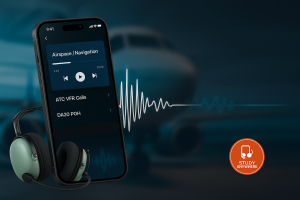
What Is Pilot Training Online?
Pilot training online refers to using digital tools—web-based platforms, mobile apps, and on-demand content—to prepare for flight training and written exams. This includes:
- Online ground school
- FAA written exam prep
- Private pilot study guides
- ATC radio practice scenarios
- Aircraft systems and POH study resources
For student pilots balancing school, work, or flight schedules, online pilot training offers flexibility that traditional classroom ground school simply can’t match.
Why More Student Pilots Are Training Online
Online pilot training has become popular for a few key reasons:
1. Study Anytime, Anywhere
You’re no longer tied to a desk or textbook. Whether you’re driving, working out, or preflighting at the airport, online tools let you stay productive.
2. Self-Paced Learning
Every student pilot learns differently. Online PPL training allows you to slow down, repeat difficult topics, or skip concepts you’ve already mastered.
3. Better FAA Written Exam Preparation
Modern FAA written exam prep platforms focus on pattern recognition, memory reinforcement, and real-world understanding—not just memorization.
How to Study for Your PPL Online (Step-by-Step)
If your goal is to pass the Private Pilot written exam confidently and efficiently, here’s a proven approach.
Step 1: Use an Online Private Pilot Study Guide
This type of training is not a replacement for flight instruction or ground school. Instead, it works best as a supplemental study tool designed to reinforce memorization and recall alongside your existing training.
Rather than following a rigid or structured guide, online supplemental tools are meant to:
- Reinforce what you already learned from your instructor or ground school
- Improve long-term memory through repetition
- Help FAA-style questions feel automatic instead of forced
Step 1: Reinforce What You’re Already Learning
The most effective online PPL study tools don’t try to teach everything from scratch. They reinforce key concepts you’re already exposed to in:
- Flight lessons
- Ground school
- Instructor briefings
- FAA handbooks
This reinforcement approach helps concepts stick instead of feeling new every time you review them.
Step 2: Add Audio-Based PPL Training
This is where most student pilots see a massive improvement.
PPL audio training allows you to learn through repetition—one of the most effective methods for long-term memory. Hearing FAA-style questions and answers repeatedly helps:
- Reinforce correct wording
- Improve recall speed
- Reduce test-day anxiety
Audio-based FAA written exam prep is especially powerful because it turns passive time into productive study time.

Step 3: Use Repetition to Master the FAA Written
Repetition isn’t about mindless memorization—it’s about recognition and confidence.
Effective online pilot training platforms use:
- Repeated question exposure
- Slightly varied phrasing
- Consistent answer reinforcement
This method mirrors how the FAA knowledge test is structured, making repetition-based learning ideal for FAA written exam prep.
Step 4: Practice ATC Radio Calls Online
Many students underestimate how much radio work affects overall confidence.
Online ATC radio practice helps you:
- Understand real controller phrasing
- Anticipate clearances
- Sound more confident on the mic
When paired with audio repetition, radio practice becomes second nature instead of intimidating.
Why Audio-Based Pilot Training Works
Audio learning aligns perfectly with how pilots actually operate:
- Aviation is verbal (ATC, instructors, checkrides)
- Cockpit learning happens while multitasking
- Repetition builds instinctive recall
Unlike reading the same textbook page repeatedly, audio-based pilot training keeps your brain engaged while reinforcing critical concepts.
This is why many students who struggle with traditional ground school thrive with online pilot training built around audio repetition.
Common Mistakes When Studying for Your PPL Online
Avoid these pitfalls:
- ❌ Relying only on reading
- ❌ Cramming instead of repeating
- ❌ Ignoring weak areas
- ❌ Studying without FAA-style questions
The best private pilot online study plans combine structure, repetition, and realistic exam prep.
The Smart Way to Train for Your Private Pilot License
Pilot training online works best when it’s:
- Structured
- Repetition-focused
- Audio-driven
- Built specifically for the FAA written exam
By combining an online private pilot study guide with audio-based FAA written exam prep, student pilots can train smarter—not longer.
If your goal is to pass the PPL written with confidence, online pilot training built around repetition and real-world understanding is one of the most effective paths available today.
Final Thoughts
Online pilot training isn’t replacing flight instructors—it’s enhancing them. When used correctly, it helps student pilots show up to lessons prepared, confident, and ahead of schedule.
If you’re studying for your Private Pilot License, the right online tools can make the difference between struggling through the written and walking in ready to pass.
Train smart. Repeat often. Fly confident.