
The FAA Private Pilot Written Exam—officially called the FAA Private Pilot Knowledge Test—is one of the first major milestones in pilot training. For many student pilots, it’s also one of the most stressful.
Not because the material is impossible, but because most students prepare for it inefficiently.
This guide explains how to pass the FAA Private Pilot Written Exam using study methods that align with how the test is designed, how the FAA evaluates knowledge, and how pilots actually retain information long term.

What Is the FAA Private Pilot Written (Knowledge) Test?
The FAA Private Pilot Written Exam is a multiple-choice knowledge test administered at FAA-approved PSI testing centers.
Key facts:
-
60 questions
-
2.5 hours allowed
-
Passing score: 70%
-
Covers regulations, weather, aerodynamics, airspace, navigation, performance, and flight operations
Although the passing score appears low, the exam requires reliable recall, not just surface familiarity. Many students delay the test or underperform simply because their study methods don’t match how the FAA tests knowledge.
Why Most Students Struggle With the FAA PPL Written Exam
Most students struggle for one main reason: passive studying.
Common mistakes include:
-
Rereading textbooks instead of testing recall
-
Studying only when seated at a desk
-
Cramming large amounts of material in short periods
-
Ignoring aviation vocabulary and FAA phrasing
The FAA Written Exam is not designed to reward memorization. It rewards understanding and recall under pressure.
The FAA Written Tests Recall, Not Recognition
Recognition-based studying happens when you look at material and think, “I remember seeing this.”
Recall-based studying happens when you can answer questions without seeing the material first.
The FAA Knowledge Test is recall-based.
To pass efficiently, your study approach must include:
-
Active recall
-
Repetition over time
-
Exposure to FAA-style questions and terminology
Without these elements, progress is slower and confidence suffers.
The Best Study Methods for the FAA Private Pilot Written Exam
1. Use Active Recall Instead of Passive Reading
Active recall forces your brain to retrieve information without prompts. This strengthens memory and improves test performance.
Examples include:
-
Answering practice questions without notes
-
Hearing a question and pausing before the answer
-
Explaining concepts out loud in your own words
Students who rely on active recall consistently outperform those who simply reread material.
2. Use Repetition Over Time to Build Retention
Cramming creates short-term familiarity. Repetition creates long-term retention.
The FAA Written covers a wide range of topics, making spaced repetition critical. Short, consistent study sessions outperform long, infrequent ones.
Even 15–20 minutes per day—done consistently—leads to stronger recall and reduced test anxiety.
3. Study Outside the Desk to Increase Total Exposure
Traditional study only happens when you sit down. High-performing student pilots study outside the chair.
Effective study moments include: 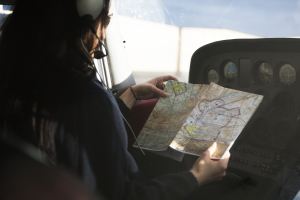
-
Driving
-
Working out
-
Walking
-
Pre-flight downtime
-
Between lessons
How Audio-Based Learning Supports FAA Written Prep
Audio study supports:
-
Repetition without additional screen time
-
Passive reinforcement of previously learned material
-
Familiarity with FAA phrasing and terminology
Many students use audio-based PPL written prep to reinforce ground school and question banks during daily routines.
👉 Learn more about FAA Written audio training here:
https://pilotlistening.com/learnmore-faawritten/
Audio study also pairs well with ATC phraseology practice, helping bridge written knowledge and real-world communication.
👉 Explore ATC / radio communication training here:
https://pilotlistening.com/learnmore-comms/
If you want to try audio study before committing, you can start with a free trial here:
https://pilotlistening.com/free-trial/
Common Mistakes That Delay Passing the FAA Written
Many students slow their progress with avoidable mistakes:
-
Using only one study resource
-
Ignoring aviation vocabulary and definitions
-
Waiting too long to schedule the exam
-
Treating the written as separate from the checkride
The written exam forms the foundation for the oral exam and checkride. Weak written prep often resurfaces later in training.
When Should You Take the FAA Private Pilot Written Exam?
Most instructors recommend taking the written:
-
After completing ground school
-
Before advanced flight training
-
While knowledge is fresh and reinforced
Delaying too long increases the chance of forgetting material and repeating study work later.
A Smarter Strategy to Pass the FAA PPL Written Exam
Students who pass efficiently typically:
-
Use multiple learning formats
-
Focus on understanding instead of memorization
-
Study consistently instead of cramming
-
Reinforce learning outside traditional study sessions
The goal is not to study more hours—it’s to study in a way that matches how the FAA evaluates knowledge.

Final Thoughts
Passing the FAA Private Pilot Written Exam does not require memorizing an entire textbook.
It requires:
-
Reliable recall
-
Repetition over time
-
Study methods that fit real life
When your study approach aligns with how the FAA tests knowledge—and how your brain retains it—the written exam becomes a manageable step instead of a roadblock.
If you’re comparing tools and study methods, this guide on the best PPL study tools provides a helpful breakdown:
https://pilotlistening.com/best-ppl-study-tools-in-2026-complete-guide/